
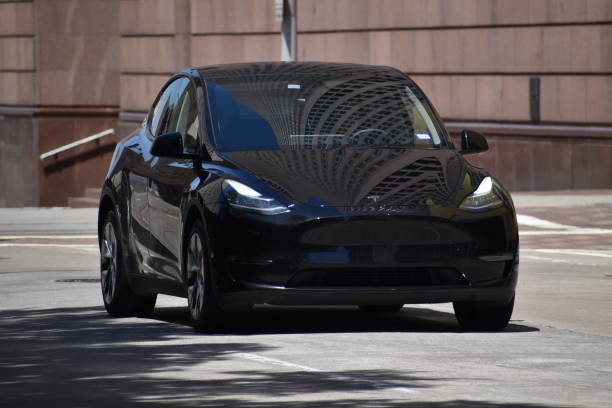

The first thing that pops into your head when someone says “self-driving car” is probably either a sleek Tesla gliding down the highway like it owns the place, or a sci-fi movie where robots take over the world. Honestly, I’m somewhere in between — part excited, part terrified that one day my Uber might decide I’m not going the right speed and take me on a detour through a cornfield. But jokes aside, self-driving cars are actually shaking up the auto industry in ways most people don’t even notice yet.
The shift from human drivers to AI chauffeurs isn’t just about convenience, it’s about completely flipping the traditional car market upside down. Car manufacturers, tech companies, regulators, and even insurance folks are scrambling to catch up. And if you think this is just about “cool tech,” think again — it’s touching everything from how cars are made, sold, and even insured.
Why traditional car companies are sweating
Old-school automakers like Ford, GM, and Toyota are feeling some serious heat. For decades, they’ve been in a game where you design a car, advertise it, sell it, and hope people buy. That was basically the playbook. But now tech giants like Google’s Waymo, Tesla, and Apple (yeah, Apple wants in too) are basically telling them: “Hey, your car doesn’t need a human at the wheel, your software is king.”
It’s like comparing someone who’s been playing Monopoly for years to a kid who just learned how to hack the bank in the game. The old rules suddenly don’t matter. Tesla, for example, isn’t just selling cars anymore; they’re selling a tech experience. Some of their updates can literally make your car smarter overnight. And for traditional companies, catching up isn’t easy — they’re still figuring out how to make a car drive itself without someone freaking out about liability or safety.
The rise of robo-taxis
One of the biggest things changing the auto industry is the concept of robo-taxis. Imagine not owning a car at all — just opening an app and having a self-driving car show up to whisk you around. Waymo is already doing this in some U.S. cities, and other companies are slowly rolling out pilots too.
This could massively impact car ownership rates. People might stop buying cars altogether, which is bad news for dealerships and auto loans. But hey, good news for people who hate parking tickets, right? According to a study by McKinsey, shared autonomous vehicles could reduce car ownership in cities by up to 30% over the next decade. That’s insane. Fewer cars, less traffic, maybe fewer angry drivers cutting you off at rush hour — fingers crossed.
Insurance is getting weird
Here’s something most people don’t think about: insurance. If a self-driving car crashes, who’s to blame? The human, the manufacturer, the software company? Insurance companies are sweating bullets trying to figure this out. Some are even offering policies specifically for autonomous vehicles, and it’s a whole new pricing model. For example, premiums might start based on software quality or miles driven by AI instead of the driver’s history. Sounds futuristic, but it’s happening.
Job shake-ups
Another messy part? Jobs. People often joke “robots are gonna take all our jobs,” but in this case, it’s kinda real. Taxi drivers, truck drivers, delivery drivers — a lot of them could see changes. But it’s not just drivers; car repair shops might change too. Fewer crashes could mean fewer repair jobs. On the flip side, new jobs in AI programming, sensor maintenance, and cybersecurity will pop up. Kind of like when your favorite coffee shop switched to ordering via app — some folks lost barista hours, but tech support suddenly had a boom.
How people actually feel
If you scroll through Twitter or Reddit, you’ll see people are kinda split. Some are super hyped about the convenience. “No more road rage, no more drunk driving,” they cheer. Others are terrified. “What if the car malfunctions on a mountain road?!” You can almost hear the panic in the caps-lock posts. Honestly, both sides have a point. Human error is the biggest cause of accidents, but trusting AI completely? That’s a leap for a lot of us.
Tech isn’t perfect yet
Speaking of leaps, let’s not forget — self-driving tech is still imperfect. Sensors can get confused in bad weather, AI sometimes misreads a stop sign, and edge cases (like a deer jumping in front of your car at night) are tricky to program. Companies are improving, sure, but it’s not like you can just press a button and go full autopilot without thinking.
The car design evolution
Self-driving cars are also changing how cars are designed. Interior layouts are shifting. Imagine a car with swivel chairs, no steering wheel, and a built-in desk — basically a mini office on wheels. That’s the dream. Some companies are even experimenting with modular interiors where the car can serve as an office, lounge, or mini-theater depending on your mood. Think of it as a Swiss Army knife of commuting.
Supply chains are getting a makeover
Manufacturers are also rethinking supply chains. AI cars need different parts — more sensors, better batteries, and software that can be updated remotely. It’s not just metal and wheels anymore; it’s chips, cameras, and code. The semiconductor shortage in 2021 showed us how delicate this whole thing can be, and the self-driving revolution makes that even more complicated.
Final thoughts
Self-driving cars aren’t just a new gadget; they’re rewriting the auto industry playbook. They’re pushing traditional carmakers to innovate, shaking up insurance, transforming jobs, and even changing city traffic patterns. Sure, there are bumps in the road — both literally and metaphorically — but the shift is happening, whether we’re ready or not.
Personally, I’m cautiously optimistic. I love the idea of reading a book on my commute instead of gripping the steering wheel while some impatient driver tailgates me. But part of me also misses the little joys of driving — that feeling of control, blasting music, windows down, singing terribly out of tune. Maybe the future won’t replace that entirely, maybe it’ll just add a new chapter where cars are smarter, cities are quieter, and humans finally get to chill a bit more behind the scenes.